

- This event has passed.
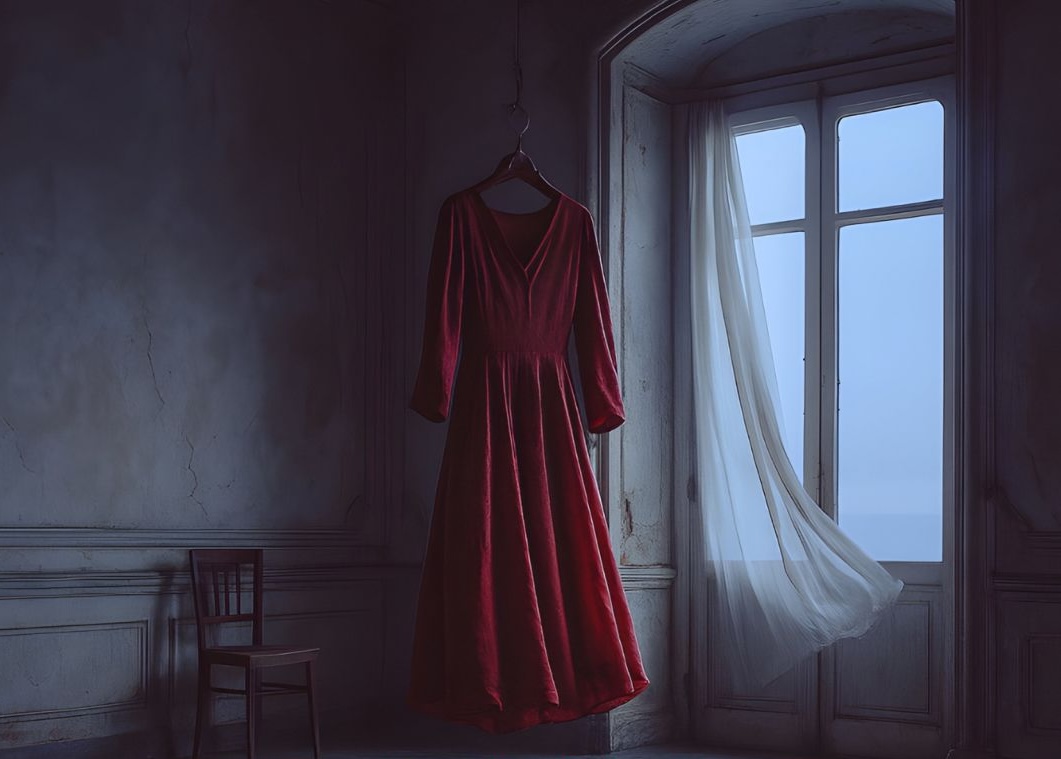
Anna. Insana Passio
Saturday, October 25 | 7:00 p.m.
Teatro di Palazzo Donn’Anna, Naples
INAUGURATION OF THE 2025/26 SEASON
OLTRE
Anna. Insana Passio
Chiara Vitiello, actress
Marta Ciappina, dancer
Fernando Manassero, live electronics
Talenti Vulcanici
Pablo Valetti, violin
Sara Bagnati, Gianluca Saggini, violas
Marius Malanetchi, cello
Margherita Pupulin, conception, stage direction, musical direction, and violin
Giuliana Carbone, stage direction
S.I.R.T. srl, stage design
Carmen Battagliese, costumes
Part of the celebrations for Napoli 2500 – Artistic Direction Laura Valente
A new production by Fondazione Pietà de’ Turchini
in co-production with Fondazione Ezio De Felice
with the support of the City of Naples
in collaboration with the Teatro di Napoli – Teatro Nazionale
Limited seating – reservations required
Email: segreteria@turchini.it
Anna. Insana Passio
Insana Passio is a phantasmagoric study on narcissism: the blind urge to triumph, unable to distinguish between love and power, giving rise to monsters of grandeur and ruin. Fragile giants, elusive to judgment—their blind race leaves us lost between envy and repulsion. Why did a vicereine, whose hand had been the most coveted in Europe for seven years, die in her thirties, unrecognized and infested with lice?
It is to answer this question that Insana Passio was conceived—an investigation into Anna Carafa della Stadera (1610–1644), a mythical yet historical figure who embodies the inextricable knot of splendor and decay, and who, 2500 years after the founding of Naples, becomes the city’s very emblem: passionate, irreconcilable, dazzling, and terrifying.
Inspired by historical sources and the psychoanalytic reflections of Alexander Lowen, the production by Margherita Pupulin is a tribute balanced between biography and myth: a poetic anatomy of narcissistic dynamics, an ambiguous voice giving contemporary resonance to a forgotten woman.
Anna Carafa’s receptions at Palazzo Donn’Anna in Posillipo were legendary for their opulence—and for the catastrophes they provoked: duels, disappearances, illicit loves, and fatal miscarriages. While Naples groaned under poverty, sieges, and the yoke of the Spanish crown, the viceroy and vicereine danced on the threshold of death, feeding both power and pleasure.
Invited to the final great reception of Donn’Anna, the audience witnesses the representation of her end—a swirling crescendo of dance, music, and words. Love and death—or love and power—take center stage in their most extreme Neapolitan form, steeped in poetry and heavy with horror. It is the sentiment we might today call “toxic love,” with its modern lexicon: gaslighting, love bombing, ghosting. And it was, indeed, a total ghosting that Anna suffered at the end of her life: once the most desired woman in Europe, she was abandoned, unacknowledged, and left to die alone, infested with lice.
This is how Margherita Pupulin chose to portray her: a phantasmagoria of absent presences, a mirror of a life dissolving into its own inner void. To the music of Trabaci, Gesualdo, De Macque, and Falconiero—some in Pupulin’s own arrangements—she juxtaposes the destructive force of electronic music by Fernando Manassero, Argentine composer and performer: analog instruments and feedback systems capture scraps, reverberations, and barely audible frequencies—true sonic ghosts. The use of magnetic tapes is a tribute to their role in early attempts to record the voices of spirits during séances, now serving to channel presences, memories, and obsessions.
Alongside Chiara Vitiello’s voice—at times amplified and distorted—embodied through the contemporary choreography of Marta Ciappina, a radical figure on the European scene capable of transforming the body into an oracular fissure, the “wordless chorus” of a string quintet weaves the tragedy of Anna.
Her story—like her unfinished palace—is destined to defy time.
Margherita Pupulin
Violinist, author, and multi-performer, Margherita Pupulin is the result of an eclectic, intermittent, and largely self-taught education. Trained in music within her family, from an early age she began to build bridges between two worlds — music and poetry/theatre.
Her musical language merges late-Renaissance polyphony, traditional music, and contemporary performance practices, including free improvisation and electronic music.
Her artistic research gravitates around existential themes — identity, meaning, fragmentation of the self, love — with particular attention to female experience and its expressive singularities.
Her recital project Il Violino Fantastico, supported by the Fondazione Pietà de’ Turchini in Naples, has achieved international recognition, with performances at the Innsbrucker Festwochen der Alten Musik, the Cervo Music Festival, and others.
Her first stage creation, Il Palazzo di Atlante, premiered at the Festival Musical de Namur in 2022. The work — involving nine musicians, one actor, and one dancer — is a contemporary reinterpretation of Erasmus of Rotterdam’s In Praise of Folly, an open reflection on the value of the irrational, of dreams, and of mystery.
Margherita studied with, among others, Riccardo Minasi and Pablo Valetti, and graduated with honors from the Conservatorio di Torino under Fabio Biondi. Her further (unfinished) studies include Musicology at the University of Pavia, Comparative Modern Literatures at the University of Turin, and Improvisation and Electronic Music at the Musik Akademie Basel.
Chiara Vitiello
Born in 1987, Chiara Vitiello graduated at the age of 14 from the Accademia “V. Bellini” in Naples. Her training continued at the Théâtre de Poche and in 2014 she earned her diploma in Corporeal Mime under Michele Monetta. She has attended numerous workshops with Elena Bucci, Giuseppe Marini, Jean-Paul Denizon, Michele Schiano di Cola, Alfonso Postiglione, and others.
In 2007 she met director Giovanni Meola, with whom she worked on various stage productions — Mannaggia al diavoletto, Le preziose ridicole, Arcangelo S. Omicida, Tre. Le sorelle Prozorov, Trilogia dell’indignazione — as well as short films with Massimo Dapporto, Giulio Scarpati, and Daniela Marazita.
She later collaborated with directors such as Gigi Di Luca, Lello Serao, Gianfelice Imparato, Nico Mucci, Ferdinando Smaldone, and Luigi Credendino.
In 2014 she performed in international festivals with La danse des amantes, directed by Sarasole Notarbartolo, and later appeared as Nerissa in The Merchant of Venice and Polyxena in Hecuba, both directed by Laura Angiulli (Teatro Galleria Toledo). With BBM Production, she expanded her experience in theatre for young audiences and in English-language productions such as Cinderella and Romeo and Juliet.
Since 2017 she has collaborated with the company Il Demiurgo, performing in Carte da legare, The Picture of Dorian Gray, Hamlet, Tartuffe, The Importance of Being Earnest, and The Taming of the Shrew, among others.
She has taken part in the Napoli Teatro Festival (In attesa di giudizio by Roberto Andò) and numerous stage, TV, and film projects including Vivi e lascia vivere, Mina Settembre, Gomorra, Resta con me, and I fratelli De Filippo by Sergio Rubini.
Recent appearances include Biografie di artisti sconosciuti by Mario Gelardi, Megastark by Luigi Leone, La resistenza negata by Fortunato Calvino, and La congiura del Fiesco by Schiller, directed by Carlo Sciaccaluga for Teatro Stabile di Genova.
In 2024–25 she performed in the Racconti per ricominciare festival with Piccoli miracoli e altri tradimenti (by Valeria Parrella, directed by Claudio Di Palma).
Marta Ciappina
Dancer and teacher, Marta Ciappina trained in New York at the Trisha Brown Studio and Movement Research. As a performer, she has collaborated with Alessandro Sciarroni, Michele Di Stefano, Marco D’Agostin, Anagoor, Simona Bertozzi, Chiara Bersani, Elisabetta Consonni, Tiziana Arnaboldi, Daniele Albanese, Daniele Ninarello, and Ariella Vidach.
As a teacher, she has worked with the Luca Ronconi School at the Piccolo Teatro di Milano (directed by Claudio Longhi), with the Alta Formazione course of the Compagnia Arearea, with the Venice Biennale Danza (directed by Wayne McGregor), and with the DA.RE project directed by Adriana Borriello.
As a movement dramaturg and coach, she collaborates with La casa d’Argilla, Andrea Chiodi, Kepler-452, and Veronica Cruciani.
She received the Premio Danza&Danza as best performer in 2022 and the Premio Ubu in 2023.
Fernando Manassero
Composer and performer based in Basel, Fernando Manassero works across various media — modified acoustic instruments, processed voices, objects, synthesizers, and scenic elements such as light, stage design, and video. His works engage with aspects of contemporary culture through music and media, focusing on the internet, collective memory, nostalgia, and the imagination of the future — all shaping both the ideas and the sound of his compositions.
Often working interdisciplinarily, he collaborates with performers, artists, and programmers, combining acoustic instruments with obsolete technologies, digital media, or recycled materials. His aesthetic draws from retro culture, science fiction, parody, and humor, creating hybrid sound worlds that mirror tensions between past, present, and possible futures. His work explores how time, memory, and technology shape our daily lives.
Manassero studied multimedia composition at HEM Genève and UNC, and improvisation at the Hochschule für Musik Basel. He also attended the IRCAM Cursus and studied with Chaya Czernowin, Steven Takasugi, Juan Carlos Tolosa, and Gerardo Gandini.
His works have been presented at renowned festivals and institutions including Festival Éclat, Sonic Matter, Klang, Manifeste, MA/IN, Musica in Prossimità, Classical Next, Biomechanics Moscow, DAC Taipei, System Shanghai, Buenos Aires Contemporary Music Festival, Gare du Nord, and the Colón Theatre Experimentation Center, performed by international ensembles and soloists.
Talenti Vulcanici
The ensemble Talenti Vulcanici was founded in 2011 from the experience and vision of the Fondazione Pietà de’ Turchini, pioneer in introducing Neapolitan audiences to previously unknown or forgotten repertoires performed by internationally acclaimed artists.
Regularly featured in the Foundation’s productions in Naples, the ensemble explores new musical paths, reinterpreting the legacy of great masters with contemporary awareness and rediscovering neglected works from the Neapolitan vocal and instrumental tradition — both sacred and secular — often in dialogue with theatre and dramaturgy.
Composer Fabio Vacchi, who wrote an original piece for the ensemble (Partenope l’Eterna, forthcoming on disc), describes them as follows: “Perhaps the most extraordinary aspect is their blend of rigor and imagination, of intellectual depth and emotional communication — qualities that make them remarkable not only in Baroque repertoire, but also in Classical, modern, and postmodern music.” The ensemble has drawn the attention of leading national and international festivals and institutions, performing under guest conductor Christophe Rousset, and appearing at the Fondazione Pergolesi Spontini (Jesi), Concerti del Quirinale, Accademia Musica Antica Milano, Muse Salentine, Oude Muziek Utrecht, Festival Barocco Alessandro Stradella, Stockholm Early Music Festival, Napoli Teatro Festival, Ravello Festival, Festival Wunderkammer(Bologna), Festival Entroterre, Jeansmusic Festival (Matthieu Mantanus), and with Collegium 1704 and Collegium Marianum in Prague.